
I've had 3 trail cameras over the years, also called hunting cameras. These have a PIR motion sensor that allows them to take a photograph of any warm-blooded creature that enters the sensor's range.
They have produced some reasonable photographs, but one has stopped sensing animals, so I'm looking for a replacement. I would like this to be higher resolution, at least 12 megapixels, so that the results are useful, not just interesting.
A quick search on Amazon lists a couple of hundred cameras ranging from about £50 to £7,799 (surely they are joking?).
The problem is that most of the cameras are not really 12 megapixels. Most have 5MP sensors and some of the famous names (like Bushnell) have even smaller ones, whilst still describing themselves as 12MP.
Friday, 3 March 2017


Monday, 12 November 2012
New Cameras
I seem to be buying at least one new camera every year. The technology seems to be improving at a great rate, but some of the gains are illusory.
Last year's hot technology was backlit CMOS sensors. CMOS sensors have been used in expensive cameras for years, but recently manufacturers have been putting them into slightly cheaper cameras. Canon, Panasonic and Sony have several models to name some of the manufacturers. In the last 18 months I've bought one from each of these.
CMOS is the technology used in computer processors, so putting it into a camera allows all sorts of wizardry, that the older CCD chips weren;t capable of. CMOS also seems to be able to capture images at lower light levels without introducing too much noise.
The Canon SX40-HS and Sony HX5v both use multiple exposures to boost low light performance, which is useless for my needs. The boat and swimmer both move in the time it takes to capture multiple images, giving me perfectly exposed very blurred images. They also struggle to focus in very low light, so even flash images are unsatisfactory. My latest Panasonic is the DMC-FZ200 and it's very similar to its predecessors as it's able to focus in almost zero light, with the focus assist light.
The Canon SX40-HS has an incredible 35x zoom, but it really needs to be mounted on a tripod for best results. I strongly believe that 20x is about the maximum useful zoom, though it depends where it starts. Marketing people emphasise the zoom range of cameras, but 20x zoom means different things depending upon the widest angle in the range. A 20x zoom that starts at the 35mm equivalent of 24mm will have a very wide angle of view at the wide end and a medium range (480mm) at the telephoto end. One that starts at 28mm will not be as wide, but the 560mm telephoto is useful for bringing distant subjects closer.
When comparing zooms you should always find out the 35mm equivalent values. The Panasonic DMC-FZ200 lens shows a range from 4.5 to 108, which means nothing to me, but I do understand what 25-600mm means. Human eyes have a focal length of roughly 50mm, so a 25mm will enable the camera to capture an image about 1.75 as wide as you can see, the 600mm end of the zoom will magnify the image about 16 times (600/50), not the 24x shown in the adverts.
Last year's hot technology was backlit CMOS sensors. CMOS sensors have been used in expensive cameras for years, but recently manufacturers have been putting them into slightly cheaper cameras. Canon, Panasonic and Sony have several models to name some of the manufacturers. In the last 18 months I've bought one from each of these.
CMOS is the technology used in computer processors, so putting it into a camera allows all sorts of wizardry, that the older CCD chips weren;t capable of. CMOS also seems to be able to capture images at lower light levels without introducing too much noise.
The Canon SX40-HS and Sony HX5v both use multiple exposures to boost low light performance, which is useless for my needs. The boat and swimmer both move in the time it takes to capture multiple images, giving me perfectly exposed very blurred images. They also struggle to focus in very low light, so even flash images are unsatisfactory. My latest Panasonic is the DMC-FZ200 and it's very similar to its predecessors as it's able to focus in almost zero light, with the focus assist light.
The Canon SX40-HS has an incredible 35x zoom, but it really needs to be mounted on a tripod for best results. I strongly believe that 20x is about the maximum useful zoom, though it depends where it starts. Marketing people emphasise the zoom range of cameras, but 20x zoom means different things depending upon the widest angle in the range. A 20x zoom that starts at the 35mm equivalent of 24mm will have a very wide angle of view at the wide end and a medium range (480mm) at the telephoto end. One that starts at 28mm will not be as wide, but the 560mm telephoto is useful for bringing distant subjects closer.
When comparing zooms you should always find out the 35mm equivalent values. The Panasonic DMC-FZ200 lens shows a range from 4.5 to 108, which means nothing to me, but I do understand what 25-600mm means. Human eyes have a focal length of roughly 50mm, so a 25mm will enable the camera to capture an image about 1.75 as wide as you can see, the 600mm end of the zoom will magnify the image about 16 times (600/50), not the 24x shown in the adverts.
Monday, 28 March 2011
Panasonic again
In August 2009 I bought another Panasonic camera to replace the trusty old DMC-FZ20. I wanted something with more megapixels, to increase the saleability of my photos. The DMC-FZ38 is a 12 megapixel bridge camera with an 18 times zoom lens.
Bridge cameras are compact cameras with an electronic viewfinder, which makes them look like small SLRs. I like the way that I can adjust the focus of the viewfinder so that the image and menus are clear, without having to wear my spectacles. They are also easier to see under all conditions than the screen on the back of a compact camera, because one's head stops light hitting the screen.
The results are good, but the build quality is rubbish. In the first year it had to be repaired three times, unlike my previous two Panasonic cameras which have never been repaired.
One of the failures happened last July, which is at the beginning of the Cross-channel swimming season, so I looked for another camera. Panasonic were not top of the list of brands, because of the reliability issues with the DMC-FZ38.
The first thing I did was to look at a number of reviews on the internet, for example www.dpreview.com and www.trustedreviews.com, Cnet and various camera sellers.
That didn't help much, because most reviews were for digital SLRs and these are too bulky for me to use whilst observing swims. The next step was to visit some retailers and see what they had to offer. This may be a little more expensive than buying of the net, but proved to be worth its weight in gold. Currys and Jessops were both happy for me to buy a camera, try it for a few days, then return it for a full refund. Tescos will also usually allow this, but strangely Argos which built its reputation on its 30 day money back guarantee won't. Their small print specifically excludes digital cameras, amongst other electronics, from this guarantee.
I tried a couple of Canons, a Nikon and a Fuji, but the results from them were all disappointing. They all lacked features that I've come to expect, from years of using Samsung and Panasonic cameras.
After three weeks of testing I was fed up with trekking back to Canterbury to exchange yet another camera, so I ended up with a Panasonic TZ8.
This is a 12 megapixel 12x zoom compact camera, with lots of scene modes, which I don't use, and PASM (Program, Aperture priority, Shutter priority and Manual) which give me all the control I need. It also takes high definition 720p video, though it doesn't have a dedicated video button like the DMC-FZ38.
I takes good photos, which is the main thing, but it too developed a fault a month ago and had to be sent away for repair.
I suppose I really need one of those tough, waterproof, cameras that every manufacturer produces nowadays, but none of them meet my requirements. These are:
* 10-20 zoom;
* PASM modes;
* Optical, or Electronic, viewfinder;
* 12+ megapixels;
* Aperture range from f2.8 to f8, or more. Not just fully open, or closed, like Sony's cameras. a real range of apertures.
* Ideally f2.8, or better, throughout the zoom range, like the DMC-FZ20.
If any manufacturer produces a camera that meets this specification, I would love to hear about it.
Bridge cameras are compact cameras with an electronic viewfinder, which makes them look like small SLRs. I like the way that I can adjust the focus of the viewfinder so that the image and menus are clear, without having to wear my spectacles. They are also easier to see under all conditions than the screen on the back of a compact camera, because one's head stops light hitting the screen.
The results are good, but the build quality is rubbish. In the first year it had to be repaired three times, unlike my previous two Panasonic cameras which have never been repaired.
One of the failures happened last July, which is at the beginning of the Cross-channel swimming season, so I looked for another camera. Panasonic were not top of the list of brands, because of the reliability issues with the DMC-FZ38.
The first thing I did was to look at a number of reviews on the internet, for example www.dpreview.com and www.trustedreviews.com, Cnet and various camera sellers.
That didn't help much, because most reviews were for digital SLRs and these are too bulky for me to use whilst observing swims. The next step was to visit some retailers and see what they had to offer. This may be a little more expensive than buying of the net, but proved to be worth its weight in gold. Currys and Jessops were both happy for me to buy a camera, try it for a few days, then return it for a full refund. Tescos will also usually allow this, but strangely Argos which built its reputation on its 30 day money back guarantee won't. Their small print specifically excludes digital cameras, amongst other electronics, from this guarantee.
I tried a couple of Canons, a Nikon and a Fuji, but the results from them were all disappointing. They all lacked features that I've come to expect, from years of using Samsung and Panasonic cameras.
After three weeks of testing I was fed up with trekking back to Canterbury to exchange yet another camera, so I ended up with a Panasonic TZ8.
This is a 12 megapixel 12x zoom compact camera, with lots of scene modes, which I don't use, and PASM (Program, Aperture priority, Shutter priority and Manual) which give me all the control I need. It also takes high definition 720p video, though it doesn't have a dedicated video button like the DMC-FZ38.
I takes good photos, which is the main thing, but it too developed a fault a month ago and had to be sent away for repair.
I suppose I really need one of those tough, waterproof, cameras that every manufacturer produces nowadays, but none of them meet my requirements. These are:
* 10-20 zoom;
* PASM modes;
* Optical, or Electronic, viewfinder;
* 12+ megapixels;
* Aperture range from f2.8 to f8, or more. Not just fully open, or closed, like Sony's cameras. a real range of apertures.
* Ideally f2.8, or better, throughout the zoom range, like the DMC-FZ20.
If any manufacturer produces a camera that meets this specification, I would love to hear about it.
Tuesday, 18 May 2010
My photographs
I've placed my photos on many sites, but today I've added my own site to showcase my swim photos. www.channelswimphotos.talktalk.net doesn't exactly trip off the tongue, but it's free and it's a start.
New Camera
If you've read my other blog, you'll know that I spend the summer observing channel swims. These are quite challenging photographically, because:
The observer is on a small boat bobbing up and down in the English Channel.
The swimmer, who is the main subject is also bobbing up and down and usually moving forward too.
Swims often start in the middle of the night, so there is little light and the weather can change from one minute to the next.
My trust Panasonic cameras (DMC-FZ20 and LS80) have given good service, but neither gives good results at high ISO settings and the DMC-FZ20 is only 5 megapixels. I therefore started looking for a replacement and instead of just diving in and buying the first camera I saw I did lots of research.
I was looking for 12 megapixels, good high ISO/low light performance, 12x zoom, manual, or at least versatile controls.
The first candidate was a Fuji S8100fd, which I actually bought, because it seemed to have a good spec and the price was reasonable. Unfortunately both examples that I tried suffered from a weird fault. As soon as I pressed the shutter release the viewfinder (or the LCD screen) went blue and fuzzy, so that it was impossible to see whether the subject was in focus. The camera was returned to the shop and I went back onto the internet to carry out more research.
The Canon G10, or G11, are highly rated, but only have 5x zoom. That's less than half the range of the DMC-FZ20, which I felt was too limiting. The Nikon range has the P100, but the reviews I read didn't rate it very highly.
In the end I just had to buy another Panasonic, the DMC-FZ38 (FZ35 in the USA), which ticked most of the boxes. The only things that let it down are the low light performance, which blurs details at ISO 800, or more.
The biggest drawback is that all Panasonic camera number images from P100000, so I now have at least 3 files with the same file names. Panasonic please take note!
The observer is on a small boat bobbing up and down in the English Channel.
The swimmer, who is the main subject is also bobbing up and down and usually moving forward too.
Swims often start in the middle of the night, so there is little light and the weather can change from one minute to the next.
My trust Panasonic cameras (DMC-FZ20 and LS80) have given good service, but neither gives good results at high ISO settings and the DMC-FZ20 is only 5 megapixels. I therefore started looking for a replacement and instead of just diving in and buying the first camera I saw I did lots of research.
I was looking for 12 megapixels, good high ISO/low light performance, 12x zoom, manual, or at least versatile controls.
The first candidate was a Fuji S8100fd, which I actually bought, because it seemed to have a good spec and the price was reasonable. Unfortunately both examples that I tried suffered from a weird fault. As soon as I pressed the shutter release the viewfinder (or the LCD screen) went blue and fuzzy, so that it was impossible to see whether the subject was in focus. The camera was returned to the shop and I went back onto the internet to carry out more research.
The Canon G10, or G11, are highly rated, but only have 5x zoom. That's less than half the range of the DMC-FZ20, which I felt was too limiting. The Nikon range has the P100, but the reviews I read didn't rate it very highly.
In the end I just had to buy another Panasonic, the DMC-FZ38 (FZ35 in the USA), which ticked most of the boxes. The only things that let it down are the low light performance, which blurs details at ISO 800, or more.
The biggest drawback is that all Panasonic camera number images from P100000, so I now have at least 3 files with the same file names. Panasonic please take note!
Monday, 15 December 2008
Panasonic DMC-LS80
The next camera I tried was a Panasonic DMC-LS80; it wasn't my first choice, but that one was only in stock in pink.
It's another 8megapixel camera with 3x optical zoom and loads of scene modes. I seldom use scene modes, because it's always possible to take a good photograph using aperture priority, shutter priority, or program mode. I would rather have a better lens or sensor, or quicker operation, than so many modes that it's difficult to know which one to use.
I certainly don't feel the need for Portrait, Soft Skin, Self Portrait, Scenery, Sports, Night Portrait, Night Scenery, Food, Party, Candle Light, 2 baby modes, Sunset, High Sensitivity, high-speed burst, Starry Sky, Fireworks, Beach, Snow and Aerial Photo modes. 1, or 2, of them may be useful, but I usually find that I can fool cameras into making the adjustments I want. Pointing the camera at an appropriate part of the scene can make it expose for the most important elements.
The Panasonic seems to be producing acceptable results. Not as good as my old DMC-FZ20, which has a Leica lens, but pretty good as this photo shows.

This is a 100% crop from it.
I think it's the best so far, it will do until I can afford a Nikon, or Leica.
It's another 8megapixel camera with 3x optical zoom and loads of scene modes. I seldom use scene modes, because it's always possible to take a good photograph using aperture priority, shutter priority, or program mode. I would rather have a better lens or sensor, or quicker operation, than so many modes that it's difficult to know which one to use.
I certainly don't feel the need for Portrait, Soft Skin, Self Portrait, Scenery, Sports, Night Portrait, Night Scenery, Food, Party, Candle Light, 2 baby modes, Sunset, High Sensitivity, high-speed burst, Starry Sky, Fireworks, Beach, Snow and Aerial Photo modes. 1, or 2, of them may be useful, but I usually find that I can fool cameras into making the adjustments I want. Pointing the camera at an appropriate part of the scene can make it expose for the most important elements.
The Panasonic seems to be producing acceptable results. Not as good as my old DMC-FZ20, which has a Leica lens, but pretty good as this photo shows.

This is a 100% crop from it.

I think it's the best so far, it will do until I can afford a Nikon, or Leica.
Fuji J50
I returned the Samsung and looked to see what else Tesco offered at a similar price. The Fuji J50 was more expensive, but seemed to tick all the right boxes and it was a Fuji. I've previously owned two Fuji cameras the excellent S7000 and the dead F700, so I have mixed feelings.
The S7000 is brilliant, it has an advanced sensor that records double the number of pixels of other cameras. Each point on the sensor can record a similar range of brightness to other cameras and also much higher levels of brightness. This is excellent for outdoor photography as it shows much more detail in clouds, for example.
The J50 was another disappointment, it too did not match my expectations. Like many recent cameras it has a large variety of scene modes, including at least one for photographing babies???
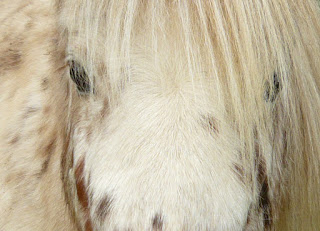
Here's another photo of our Miniature British Spotted Pony, which is very similar to that in my last post.

I took the camera back and managed to obtain a refund. Full marks Tesco, that's what I call Customer Service.
The S7000 is brilliant, it has an advanced sensor that records double the number of pixels of other cameras. Each point on the sensor can record a similar range of brightness to other cameras and also much higher levels of brightness. This is excellent for outdoor photography as it shows much more detail in clouds, for example.
The J50 was another disappointment, it too did not match my expectations. Like many recent cameras it has a large variety of scene modes, including at least one for photographing babies???
Here's another photo of our Miniature British Spotted Pony, which is very similar to that in my last post.

I took the camera back and managed to obtain a refund. Full marks Tesco, that's what I call Customer Service.
Friday, 14 November 2008
Samsung L100
I have always tried to carry a camera in my pocket, since climbing over the dunes near here and seeing a beautiful tall ship. It was close to shore and would have made a photo to remember, if only I had taken my camera.
I made up my mind to always carry a camera after that incident and the Fuji F700 was small and light enough to accompany everywhere for 3 years, until it died in autumn 2007. Money was tight, since I have no job, so I looked for a cheap replacement. Tesco sell Technika cameras, which are really very cheap, so I thought I'd try the Technika SA-H366 a 10 megapixel model. The results were frankly appalling, so I soon returned it and upgraded to a Samsung S85 (N.B. the Samsung D85 is identical, except that it's black, instead of silver).
This has been my constant companion for the last 10 months, but it failed to close last week, so it was back to Tesco. The camera was still within Tesco's 1 year warranty, but no longer stocked, so they offered me a replacement.
I searched the meagre details displayed in store and eventually settled for the Samsung L100. This is available in Black, Silver and Pink, needless to say I did not chose pink.
It's a nice little camera, about the size of a packet of cigarettes, with many good features. Face detection, digital image stabiliser (anti-shake) and a good ISO range from 100 - 1600.
I thought that it was a bit too small, even though I don't have very big hands. It was easy to use, with a similar menu layout to the S85.
The aluminium body meant that felt solid despite its small size, but I was really unimpressed by the picture quality. I always set digital cameras to their highest quality setting. There's no point skimping, as memory cards are so cheap.
I think that the processor was too aggressive when creating the jpeg, or the lens is just not good enough for the 8 megapixel chip.
Here's an example photo:

And this is a 100% crop (I viewed the image at 100%, so that I could see the actual pixels recorded by the camera, then cut this out of the image and saved it).

To me it looks like an artist has lost his patience and painted some of the picture with a very large brush.
I made up my mind to always carry a camera after that incident and the Fuji F700 was small and light enough to accompany everywhere for 3 years, until it died in autumn 2007. Money was tight, since I have no job, so I looked for a cheap replacement. Tesco sell Technika cameras, which are really very cheap, so I thought I'd try the Technika SA-H366 a 10 megapixel model. The results were frankly appalling, so I soon returned it and upgraded to a Samsung S85 (N.B. the Samsung D85 is identical, except that it's black, instead of silver).
This has been my constant companion for the last 10 months, but it failed to close last week, so it was back to Tesco. The camera was still within Tesco's 1 year warranty, but no longer stocked, so they offered me a replacement.
I searched the meagre details displayed in store and eventually settled for the Samsung L100. This is available in Black, Silver and Pink, needless to say I did not chose pink.
It's a nice little camera, about the size of a packet of cigarettes, with many good features. Face detection, digital image stabiliser (anti-shake) and a good ISO range from 100 - 1600.
I thought that it was a bit too small, even though I don't have very big hands. It was easy to use, with a similar menu layout to the S85.
The aluminium body meant that felt solid despite its small size, but I was really unimpressed by the picture quality. I always set digital cameras to their highest quality setting. There's no point skimping, as memory cards are so cheap.
I think that the processor was too aggressive when creating the jpeg, or the lens is just not good enough for the 8 megapixel chip.
Here's an example photo:

And this is a 100% crop (I viewed the image at 100%, so that I could see the actual pixels recorded by the camera, then cut this out of the image and saved it).

To me it looks like an artist has lost his patience and painted some of the picture with a very large brush.
Monday, 3 November 2008
Summer Job
I observed 8 swims for the Channel Swimming Association and thoroughly enjoyed it. It gave me many opportunities to take photographs, most of them are posted on Photobox. Not just swimmers, but also some of the 500, or more, ships that travel up, down and across the English Channel every day.
The work involves sitting on a small boat watching someone swim from England to France, a process that takes on average 12½ hours. It can be boring, tiring and uncomfortable, but when they succeed it's unbelievably satisfying to have contributed in some small way.
This photo shows one of the boats that accompanies swimmers and a cargo boat. The coastguard say that swimmers have no rights in the channel, so sometimes the big ships are really close. The swimmer is alongside the tiny boat just in front of the cargo ship, they were probably about 300m apart.
The work involves sitting on a small boat watching someone swim from England to France, a process that takes on average 12½ hours. It can be boring, tiring and uncomfortable, but when they succeed it's unbelievably satisfying to have contributed in some small way.
This photo shows one of the boats that accompanies swimmers and a cargo boat. The coastguard say that swimmers have no rights in the channel, so sometimes the big ships are really close.
 The swimmer is alongside the tiny boat just in front of the cargo ship, they were probably about 300m apart.
Wednesday, 29 October 2008
Smartpix revisited
I downloaded the latest version of Smartpix and added some photos to it. It crashed when I closed the file properties window.
The biggest drawback that I can see is that there is no facility to import keywords from photos. That would mean me re-entering all the keywords, or finding another piece of software to extract a list of keywords from the jpegs.
Exiftool
The biggest drawback that I can see is that there is no facility to import keywords from photos. That would mean me re-entering all the keywords, or finding another piece of software to extract a list of keywords from the jpegs.
Exiftool
Wednesday, 27 August 2008
British Summer
I've volunteered to be an observer for the Channel Swimming Association (CSA), which is the official body overseeing channel swimmers. The English Channel is one of, if not the most, challenging place for swimmers in the world.
The shortest distance from the UK to Frances is about 21 miles as the crow flies. Nearer 28 miles for a swimmer, because of the strong tidal currents.

This image shows a GPS plot of one of the swims that I observed.
The water is never warm and sometimes very cold. 17°C (62.5°F) is about the warmest it gets. To add to swimmers' problems this is also one of the busiest stretches of water in the world. Up to 500 ships pass through the Straits of Dover every 24 hours. The Ship AIS web site is a brilliant way to see just how busy it is.
The rules of the CSA prohibit anything but the most basic swimming costume and cap, no bouyancy aids and no protection from the cold except for a layer of grease. Some swimmers even forgo this basic protection.
The shortest distance from the UK to Frances is about 21 miles as the crow flies. Nearer 28 miles for a swimmer, because of the strong tidal currents.

This image shows a GPS plot of one of the swims that I observed.
The water is never warm and sometimes very cold. 17°C (62.5°F) is about the warmest it gets. To add to swimmers' problems this is also one of the busiest stretches of water in the world. Up to 500 ships pass through the Straits of Dover every 24 hours. The Ship AIS web site is a brilliant way to see just how busy it is.
The rules of the CSA prohibit anything but the most basic swimming costume and cap, no bouyancy aids and no protection from the cold except for a layer of grease. Some swimmers even forgo this basic protection.
Tuesday, 4 March 2008
More on Photo Organisation
As I mentioned before, I have tried several different programs. ACDSee ran out of steam at around 4000 images, but Smartpix was much better. I had some issues with running it, but their technical support is excellent. I think that your emails are answered by one of the developers, so if there is a problem they really know what they're talking about and can actually fix it.
I'd rate it at about 4 out of 5, but that's based on an early version. I will download and try the current version and let you know how I fare.
Why use any of these products?
Photo managers allow you to attach tags (sometimes called keywords) to your images. You can then easily find all of the photos that have the tags you specify. In the wedding example I used last time, each photo could have the names of the bride and groom, venue, type of car, location and many more tags attached to it.
I just file my photos by year and month taken, selecting the appropriate tags allows me to find exactly the photos I need. It is also extremely useful if you want to sell your photographs as your customers can search on the tags.
Note that both of these programs keep the tags separate from the photos. They maintain databases, which link each photo to its tags. If you can try to ensure that the tags are also written to the jpeg, as this makes searching and posting photos on websites easier.
I'd rate it at about 4 out of 5, but that's based on an early version. I will download and try the current version and let you know how I fare.
Why use any of these products?
Photo managers allow you to attach tags (sometimes called keywords) to your images. You can then easily find all of the photos that have the tags you specify. In the wedding example I used last time, each photo could have the names of the bride and groom, venue, type of car, location and many more tags attached to it.
I just file my photos by year and month taken, selecting the appropriate tags allows me to find exactly the photos I need. It is also extremely useful if you want to sell your photographs as your customers can search on the tags.
Note that both of these programs keep the tags separate from the photos. They maintain databases, which link each photo to its tags. If you can try to ensure that the tags are also written to the jpeg, as this makes searching and posting photos on websites easier.
Friday, 20 April 2007
OK the shot is in the camera, what next?
When I bought my first digital camera I used to simply save photographs on my PC. That meant thinking of a name for each file leading to file names like Dover Castle 1, Dover Castle 2 etc.
I then spent some time inventing a way to organise the files. I chose to put them into separate folders for each subject, but this rapidly became a nightmare, because many pictures didn't fit neatly into one category.
Take for example a photo taken at a wedding. This might show friends, family, the venue, a limousine, wedding cake, champagne...
OK I could just have a folder for each wedding, but which one contains the picture of the white Rolls Royce?
Fortunately I then discovered ACDSee. This piece of software combines good photo editing and a database allowing you to add tags, or keywords, to your photos. These enable you to use several different words on each image.
Unfortunately my library of images grew too big for ACDSee to cope and their upgrade policy sucks, so I looked at other options.
Read the next post for details.
I then spent some time inventing a way to organise the files. I chose to put them into separate folders for each subject, but this rapidly became a nightmare, because many pictures didn't fit neatly into one category.
Take for example a photo taken at a wedding. This might show friends, family, the venue, a limousine, wedding cake, champagne...
OK I could just have a folder for each wedding, but which one contains the picture of the white Rolls Royce?
Fortunately I then discovered ACDSee. This piece of software combines good photo editing and a database allowing you to add tags, or keywords, to your photos. These enable you to use several different words on each image.
Unfortunately my library of images grew too big for ACDSee to cope and their upgrade policy sucks, so I looked at other options.
Read the next post for details.
Sunday, 8 April 2007
More on Stock Photography
I've now had a few digital photographs accepted by Dreamstime and it's interesting to see what's acceptable and what isn't.
Public buildings and other architecture seems to be unacceptable, together with arty photographs. Though they did accept some images that I feel fell into the latter category. For example this photograph of our little pony and one of our kitten.
So far the jury's out. I know vaguely what art directors are looking for, but have not yet matched this to the photographs I've taken.
Fotolia is another stock photography site and interestingly their requirements are slightly different. They have accepted a few images that Dreamstime rejected. So it's a bit like Decca rejecting the Beatles, if at first you're rejected, try somewhere else.
That's just about it for today, if you would like to see some of my work, you can search on either of these libraries for my user name SteveF48. I also have some images on Flickr, which I don't think are suitable for stock libraries (SteveF1948).
Public buildings and other architecture seems to be unacceptable, together with arty photographs. Though they did accept some images that I feel fell into the latter category. For example this photograph of our little pony and one of our kitten.
So far the jury's out. I know vaguely what art directors are looking for, but have not yet matched this to the photographs I've taken.
Fotolia is another stock photography site and interestingly their requirements are slightly different. They have accepted a few images that Dreamstime rejected. So it's a bit like Decca rejecting the Beatles, if at first you're rejected, try somewhere else.
That's just about it for today, if you would like to see some of my work, you can search on either of these libraries for my user name SteveF48. I also have some images on Flickr, which I don't think are suitable for stock libraries (SteveF1948).
Saturday, 31 March 2007
Food for thought
Please read Frankie's blog and click on one of her links, she needs the encouragement and I need the money.
Stock Photography
The thing that I had not fully realised was that stock photography libraries are not looking for artistic photographs.
They want photographs that are interesting to their buyers. I've now submitted around 50 photographs to Dreamstime and only had 4 accepted. Some of them were frankly not up to my usual quality, but most were rejected because Dreamstime already have more than enough images of that particular subject.
It just goes to show that to make money from Digital Photography you need to know what your customers want. Equally you can save a lot of time and effort by not photographing subjects that are not going to sell.
They want photographs that are interesting to their buyers. I've now submitted around 50 photographs to Dreamstime and only had 4 accepted. Some of them were frankly not up to my usual quality, but most were rejected because Dreamstime already have more than enough images of that particular subject.
It just goes to show that to make money from Digital Photography you need to know what your customers want. Equally you can save a lot of time and effort by not photographing subjects that are not going to sell.
Thursday, 29 March 2007
Making money
The simplest way to make money from your photographs is to sell them via a photographic library.
Yes and no. There are several pitfalls as I've been discovering:
Yes and no. There are several pitfalls as I've been discovering:
- Beauty lies in the eye of the beholder. You may love an image that the library hates;
- There's no publicity... Some libraries will not accept images that have logos, or show trademarks;
- Model releases. If your photograph shows a recognisable person you must ask them to complete a model release. This is just a simple statement that they won't sue the shirt off your back;
- Most libraries have a minimum size limit, typically 3 megapixels.
The beauty of photo libraries is that it doesn't cost you anything to join.
The downside of this is that millions of people know this, so you have lots of competition.
I've submitted my photos to Dreamstime and Fotalia, please click on one of these links to see what they can offer. Images submitted to both Dreamstime and Fotalia have to be approved by one of their editors, which can take over a week.
It's therefore not a quick way to make your work available for sale.
Monday, 19 March 2007
Getting started with a new camera
It is usually very easy to take your first photo with a digital camera, but there are some things to beware of:
- Does the camera have a rechargeable battery? If so you will need to charge it before you can use the camera. It is best to leave it on charge overnight the first time, even if the indicator goes out or changes colour.
- Does the memory card need formatting? You did remember to buy a bigger card, didn't you? Most cameras do not require you to format their cards, but some do.
Switch the camera on, point it and press the shutter release. It's that simple, because the default settings for every camera that I've ever used make it so.
The automatic settings are designed to take a reasonable photograph of a static subject in daylight. We will discuss how to broaden the scope of your photography in a later blog, but for now go off and fill the card.
Thursday, 8 March 2007
Memory cards
There are several different types of memory for cameras and if you buy the wrong one it won't work in your digital camera.
SD cards are compatible with MMC cards. The main difference between them is that SD cards can be protected and work faster than MMC. SDHC are the same, but have higher capacity and will not work in all cameras. Check the technical specifiation to see whether they will work with your choice.
CF cards (Compactflash) have been around for a while, but are still popular and the newer ones are as fast as any other type of card.
Sony cameras usually use their own type of card called Memory Stick. This comes in a variety of shapes and sizes, so check the specification carefully.
XD card is the newest. It was jointly deveoped by Olympus and Fuji and is the smallest card in common use. There are two types H & M, modern cameras can use either, but once again check carefully.
The last format is Smartmedia, this is just about obsolete. If you buy a camera that requires Smartmedia, for example on eBay! . It's almostly certainly old stock.
SD cards are compatible with MMC cards. The main difference between them is that SD cards can be protected and work faster than MMC. SDHC are the same, but have higher capacity and will not work in all cameras. Check the technical specifiation to see whether they will work with your choice.
CF cards (Compactflash) have been around for a while, but are still popular and the newer ones are as fast as any other type of card.
Sony cameras usually use their own type of card called Memory Stick. This comes in a variety of shapes and sizes, so check the specification carefully.
XD card is the newest. It was jointly deveoped by Olympus and Fuji and is the smallest card in common use. There are two types H & M, modern cameras can use either, but once again check carefully.
The last format is Smartmedia, this is just about obsolete. If you buy a camera that requires Smartmedia, for example on eBay!
. It's almostly certainly old stock.
Wednesday, 7 March 2007
Choosing your first camera
This post will tell you what to look for in a digital camera and what to avoid. It is based on the experience I have gained from buying and using half a dozen digital cameras over the last 7-8 years and over 30 years of photography using conventional film cameras.
The best cameras are digital SLRs. They have the biggest sensors and lots of accessories to help you take photographs in almost any situation.
I don't have one! I would like to, but I can't afford to buy one yet. The price is dropping rapidly and I hope to buy one within a year, or two, but they are still expensive and I can't justify the cost.
I assume that you are reading my post, because you want to get into digital photography, but need some help. In that case feel free to ask me questions, but do not go out and buy a digital SLR. In fact don't buy any camera just yet.
Ask yourself the following questions first:
The best cameras are digital SLRs. They have the biggest sensors and lots of accessories to help you take photographs in almost any situation.
I don't have one! I would like to, but I can't afford to buy one yet. The price is dropping rapidly and I hope to buy one within a year, or two, but they are still expensive and I can't justify the cost.
I assume that you are reading my post, because you want to get into digital photography, but need some help. In that case feel free to ask me questions, but do not go out and buy a digital SLR. In fact don't buy any camera just yet.
Ask yourself the following questions first:
- What will I photograph?
- When will I take photos?
- How big do I want to print my pictures?
- What can I afford?
If you are going to take photographs for the family album a simple camera with a flash may be suitable. It's worth trying to find one with an optical zoom lense, if you can. Avoid cameras made by electronics companies, unless they are associated with a traditional camera or lens company.
e.g. Sony and Carl Zeiss, Samsung and Schneider, Panasonic and Leica, HP and Pentax
Something like this:
Amazon's blurb says that it has:
- 4 million effective pixels, usually this is quoted as 4 megapixel, or 4.0mp. More is better, but 4.0mp should produce at least an A4, or letter, sized photographic quality print;
- 3 x optical zoom, just what the doctor ordered. Ignore anything about digital zoom, I'll cover that in a later post. Optical zoom is what you need to get closer to the action, so bigger is better;
- Special scene settings these allow you to quickly optimise the camera for portrait, sports photo, landscape or night scenes;
- Movie mode is not as good as a proper video camera, but it's OK if you just want something to email or view on your PC.
- 12MB internal memory, might be useful as a last resort, but you still need a memory card!
What it doesn't say is:
- The batteries supplied with it will not last very long, so make sure that you buy more. I recommend buying a charger and rechargeable Ni-MH batteries like these:
The camera only takes 2 batteries, so you can still use the camera while you're charging batteries.
- There are many different types of memory for cameras, make sure that you buy the correct type and size. The types are not interchangeable and many cameras cannot use the largest available cards. This camera uses XD cards like:
It's better to buy 2-3 cards of 256, or 512, mb than to buy the largest card you can afford. That way if the card is damaged, or lost, you won't lose all of your images.
You should be able to connect the camera directly to your PC, but a card reader is handy. Especially if both sets of batteries are flat.
Although I have said that bigger is better, don't go over the top and if possible try to get your hands on a camera before you buy. If you don't have a camera shop locally, look for a review on http://www.dpreview.com/.
If you have any questions about anything in this blog please ask and I'll try to answer.
Subscribe to:
Posts (Atom)